The signal, the hack, and the startup nobody is talking about
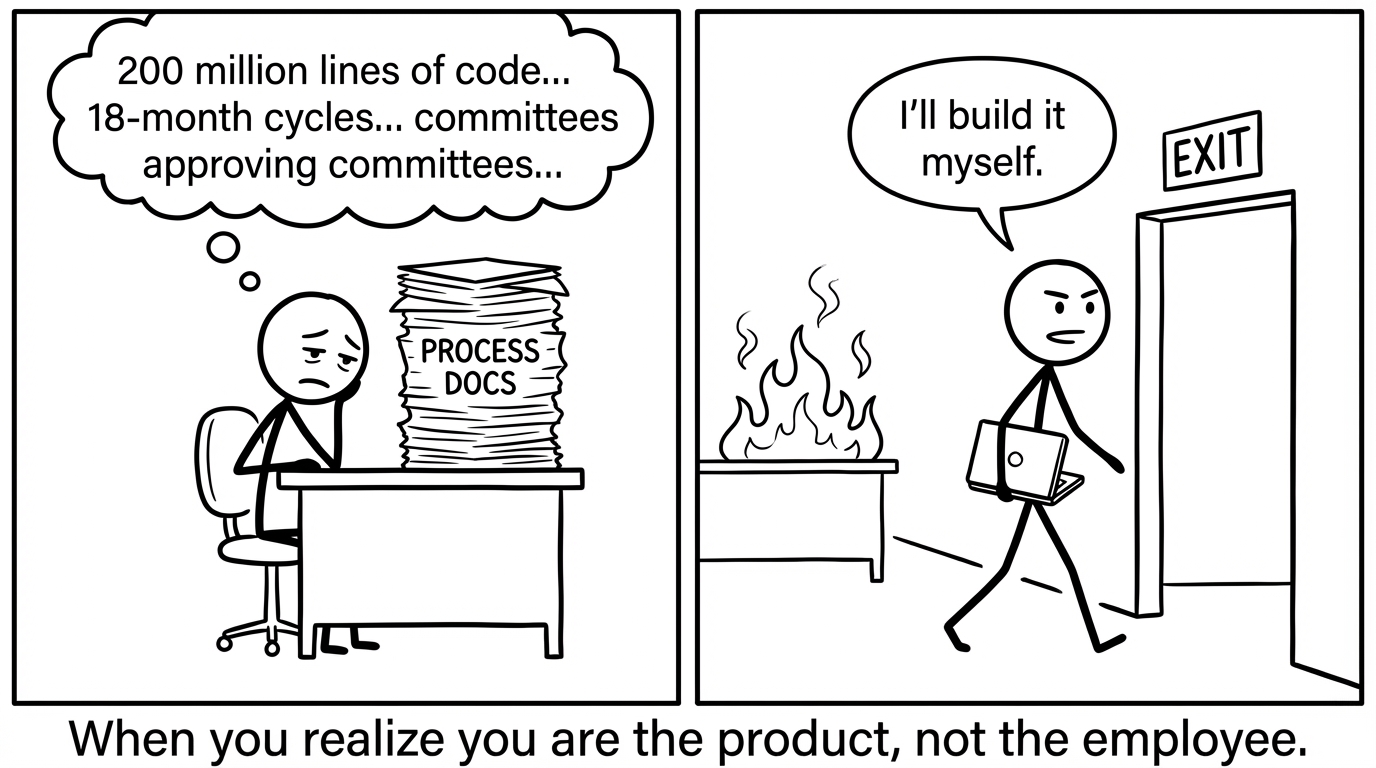
$ cat /var/log/autobreakout/the-signal.log THE SIGNALI spent 8 years inside the automotive engineering machine. Continental. German premium OEM consulting. The kind of roles where you learn exactly how a 200-million-line codebase ships to production and exactly why the process is broken. I quit because the system would not let me fix it from within. Not for lack of trying. The dysfunction is structural: 18-month development cycles, committees that exist to approve other committees, and a talent pipeline that treats its best engineers as interchangeable headcount. When Continental cut 7,000 more jobs in 2025, I was not surprised. I had already left. What I built instead: four verticals, all from domain expertise, all solo. AutoBreakout - 50 startup ideas for automotive engineers who want to break out. Every idea maps domain knowledge to a product the industry actually needs. The New Automotive - a daily content engine and vendor marketplace connecting automotive AI builders. Alphavant - an AI-native agency serving 15+ B2B tech founders with zero employees. Tracely - the first automotive MCP server, encoding 8 years of engineering knowledge into tools that replace $300/hr consultants. Zero employees. Zero VC. One thesis: domain expertise multiplied by AI multiplied by agency equals breakout. There are over 100,000 automotive engineers who have been displaced since 2023. VW alone announced 35,000 cuts. Bosch, ZF, Continental, GM, Ford - the list keeps growing. Most of those engineers will find another salaried role. A few will realize that the knowledge they carry is worth more as a founder than as an employee. This newsletter is the bridge. Every Tuesday, you get the signal (what is actually happening), the hack (what I built this week and how), and the startup nobody is talking about (real builders shipping real products from domain expertise). ════════════════════════════════════════════ 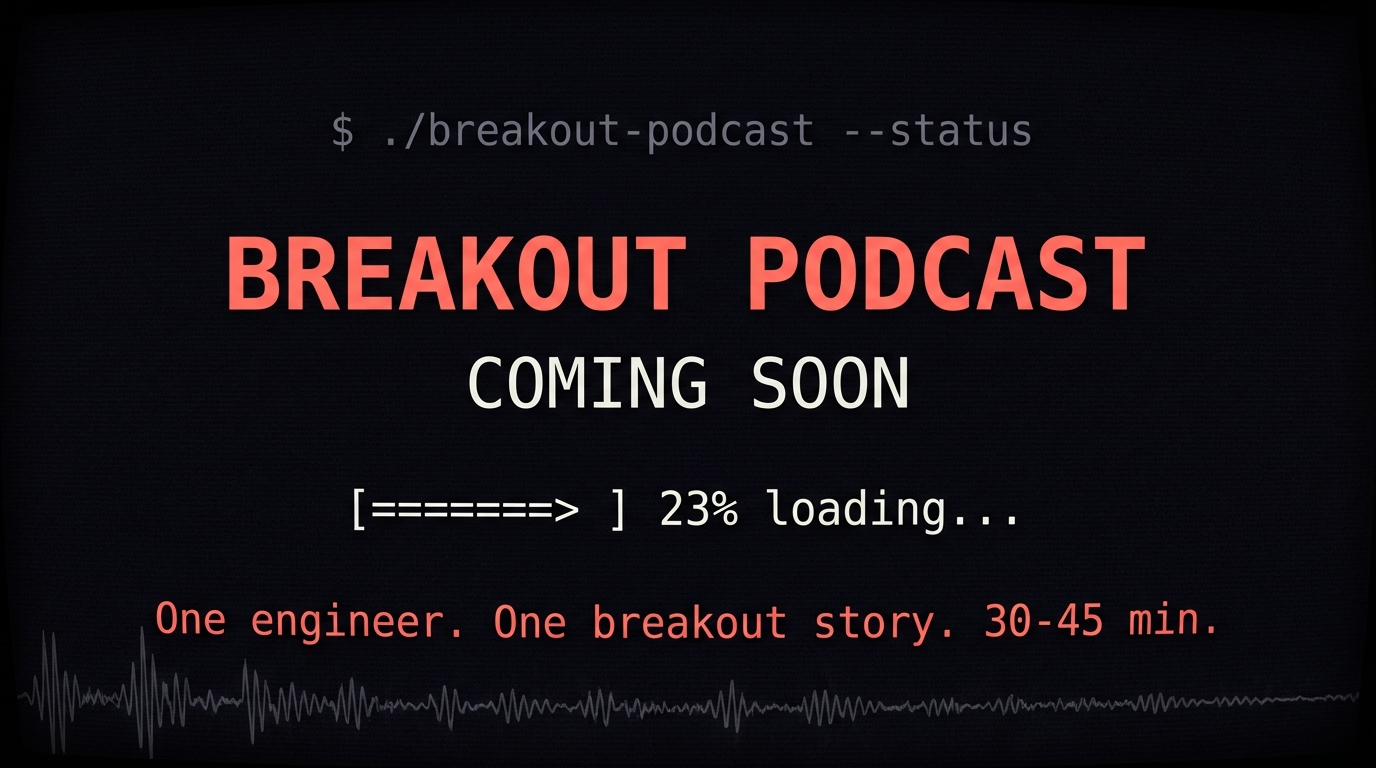
$ ./breakout-podcast --status PODCAST CLIPComing soon: The Breakout Podcast Conversations with engineers who quit corporate and built companies. No guru energy. No hustle content. Just builders talking about what actually works when you take 10 years of automotive domain expertise and turn it into a product. The guests will come from the AutoBreakout blog - real founders who broke out of Continental, Bosch, OEM engineering, and Tier-1 consulting to build startups. Each episode covers: what they built, what domain expertise gave them the edge, how long it took, and what they would do differently. The format is simple: one engineer, one breakout story, 30-45 minutes. The kind of conversation that happens at 11pm at a trade show bar but never makes it into a conference talk. Subscribe to this newsletter to get notified when episodes drop. ════════════════════════════════════════════ 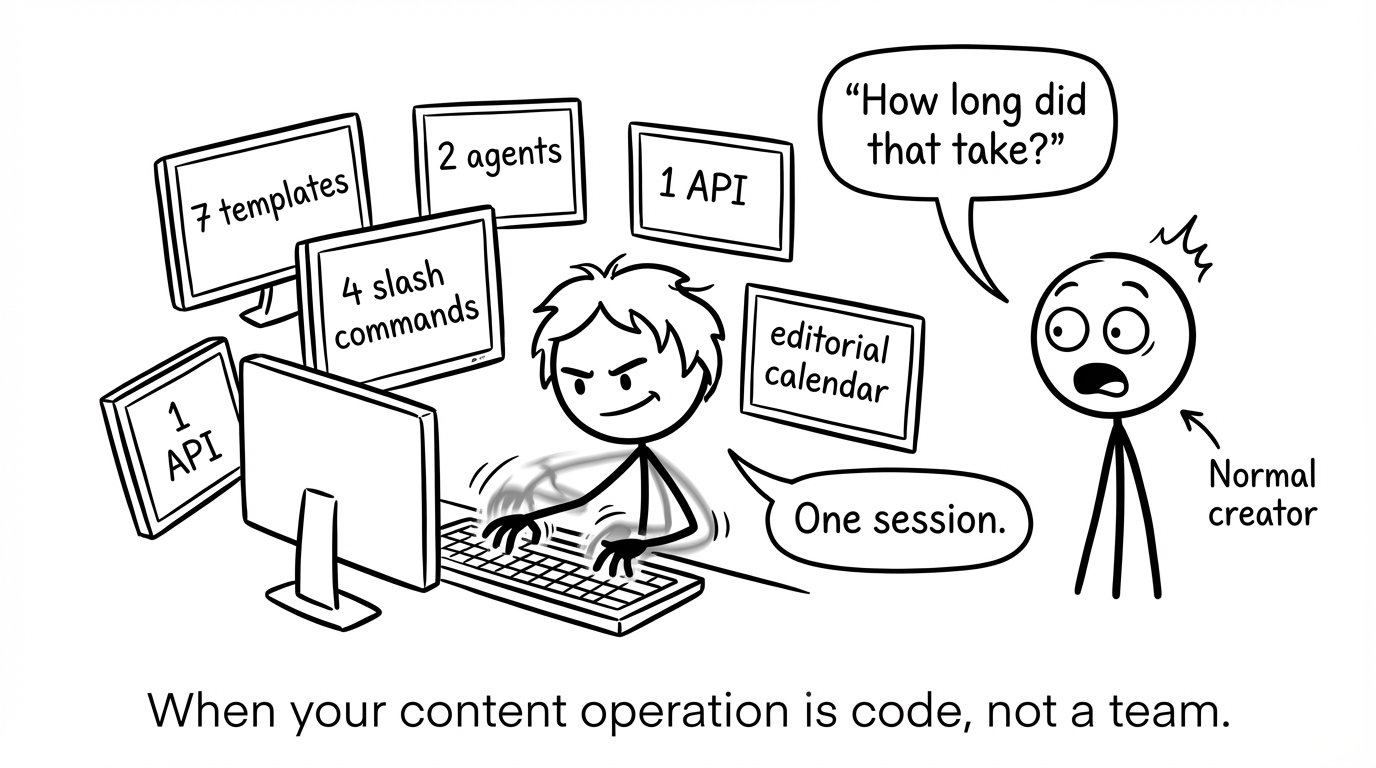
$ git log --oneline -1 newsletter/ BUILD LOGThis week I built the production system you are reading right now. The problem: newsletters take most creators 4-8 hours per issue. Research, writing, editing, formatting, scheduling. For a solo founder already running 4 verticals and 15+ client accounts, that is time I do not have. How it works: I used Claude Code to build an entire newsletter production pipeline in a single session. 16 files total. // system spec templates: 7 (master + 6 sections) agents: 2 (production + calendar) commands: 4 (issue, calendar, publish, metrics) api_wrapper: 1 (kit-api.py, Kit v4) calendar: 12-week rolling, 4 pillars total_files: 16 | build_time: 1 session 4 slash commands for the production workflow: /newsletter-issue - generates a full issue from the editorial calendar /newsletter-calendar - plans and updates the 12-week rolling calendar /newsletter-publish - pushes a finished issue to Kit via API /newsletter-metrics - pulls open rates, click rates, and subscriber growth The result: what normally takes a content team weeks to set up took one person plus AI agents one working session. The entire system is version-controlled, template-driven, and repeatable. Next week's issue will take under 60 minutes from research to publish. This is the meta-lesson: vibe coding is not just for SaaS products. You can build your entire content operation as code. The newsletter system that documents itself. ════════════════════════════════════════════ 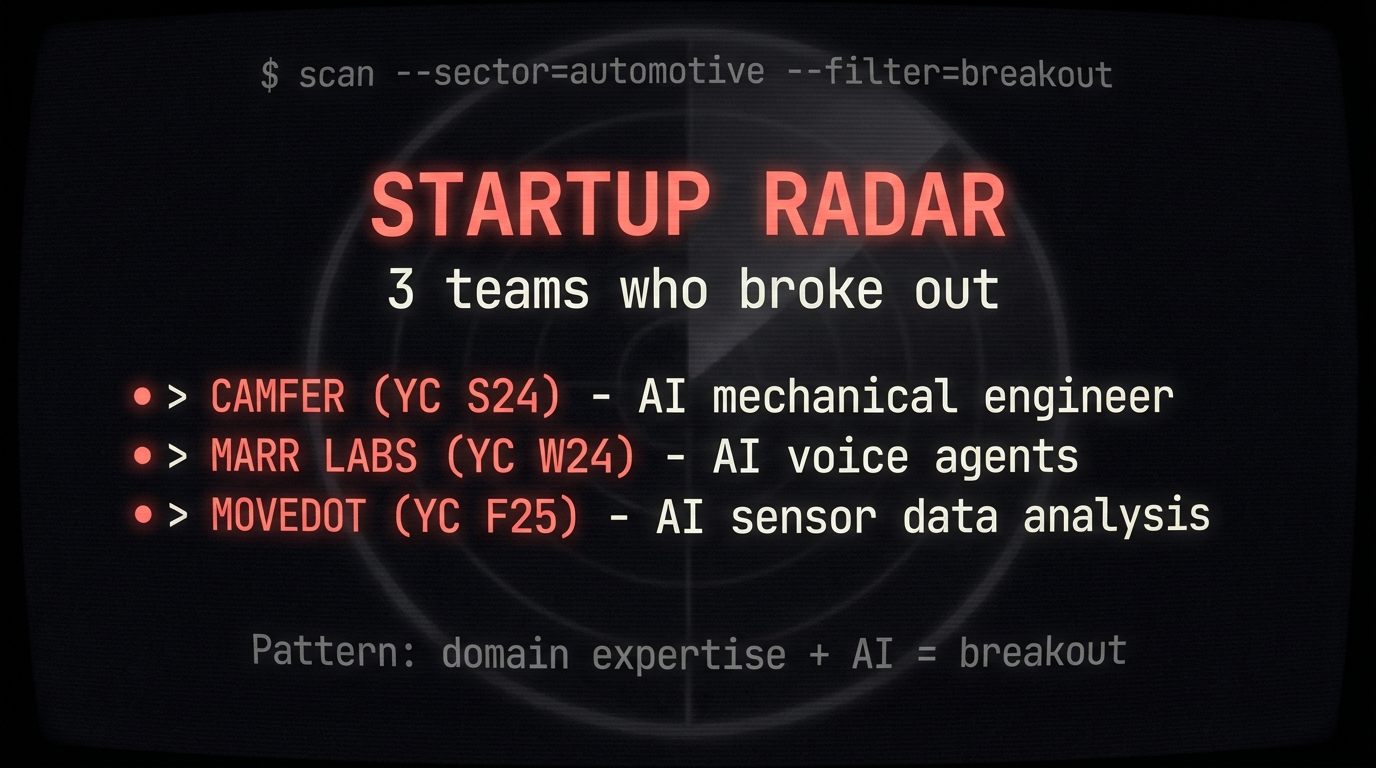
$ scan --sector=automotive --filter=breakout STARTUP RADARThree engineers who broke out. The pattern: deep domain knowledge plus AI leverage equals a startup the industry never saw coming. SCAN RESULT 01 ////// Camfer (YC S24) AI mechanical engineer that automates CAD workflows Arya Bastani and Keaton Elvins left AWS, Roth Vann left Meta - three Berkeley engineers who built what every manufacturing team wishes existed: an AI that generates parametric CAD models from natural language. $4.8M seed round. 4-person team replacing engineering workflows that currently take days. The insight: mechanical engineers spend 60-80% of their time on repetitive CAD work. Camfer automates it. > Read the full Camfer profileSCAN RESULT 02 ////// Marr Labs (YC W24) AI voice agents replacing call centers Dave Grannan built Vlingo (acquired by Nuance for $225M, powered the first Siri). Han Shu co-founded Vlingo, then Wyth (acquired by Airbnb). Combined: $385M+ in exits, 25 patents, an MIT PhD. Now they are building AI voice agents indistinguishable from humans for the $500B call center industry. When the people who literally built the voice behind Siri tell you they can replace human agents, the industry should listen. > Read the full Marr Labs profileSCAN RESULT 03 ////// MOVEdot (YC F25) AI agents for sensor data analysis Girish Radhakrishnan and Bruno Finco spent 10 years as forward-deployed engineers in motorsports and automotive. They watched test engineers drown in sensor data that took hours to analyze manually. MOVEdot's AI agents process 100x more data - video, telemetry, test standards, sensor logs. They closed their first $30K deal within 2 weeks and became the official AI partner of HMD Motorsports. This is what happens when engineers who lived the problem for a decade build the solution. > Read the full MOVEdot profile════════════════════════════════════════════ 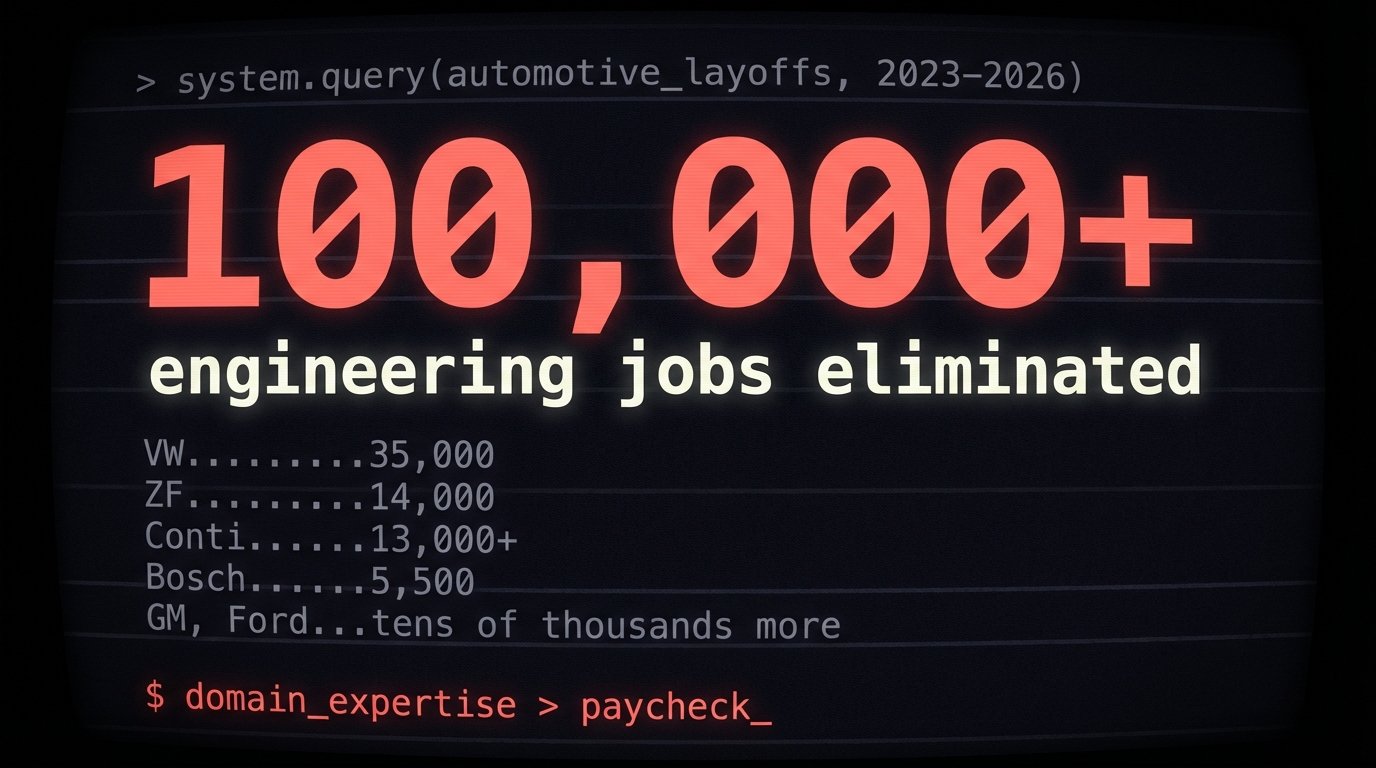
> system.query(automotive_layoffs, 2023-2026) THE NUMBER100,000+ engineering jobs eliminated Automotive engineering jobs eliminated globally since 2023. VW........35,000 ZF........14,000 Conti.....13,000+ Bosch.....5,500 GM, Ford..tens of thousands more src: company press releases, 2023-2026 The industry is shedding the exact people who understand it best. Most will find another salaried role and restart the cycle. A few will realize that 5-20 years of domain expertise is not resume filler - it is a moat that no AI model has been trained on. Every displaced engineer carries knowledge worth more as a product than as a paycheck. The gap is not talent. The gap is the bridge from "employee with deep knowledge" to "founder with a product." That bridge is what we are building here. ════════════════════════════════════════════ 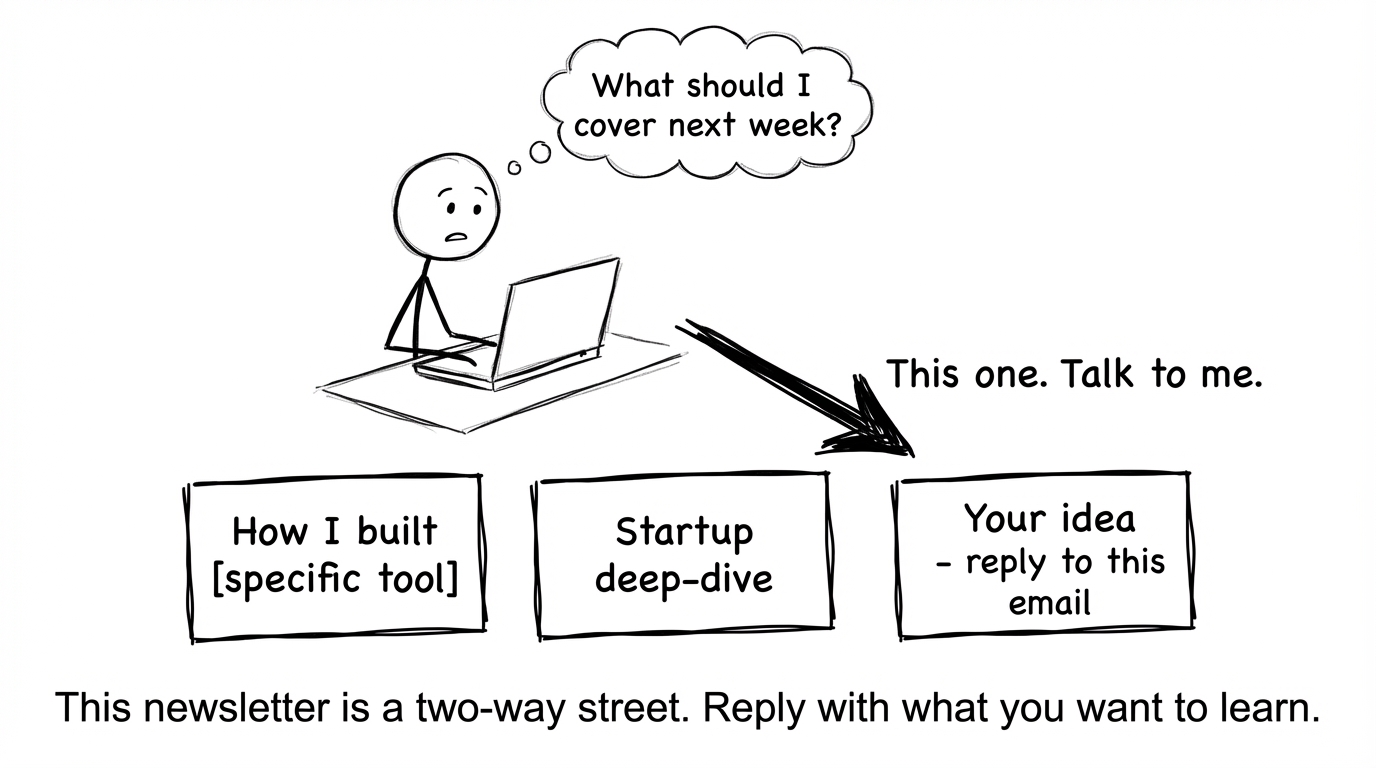
$ echo "your turn" YOUR TURNThis newsletter is a two-way street. I want to write about what actually matters to you. What should I cover next week? Reply to this email with: [1] A specific tool or workflow you want me to build live [2] A startup you think deserves a deep-dive [3] A topic you are struggling with right now The best replies become next week's content. Talk to me. 50 startup ideas for automotive engineers who want to break out. The AutoBreakout Newsletter by Lukas Timm // Issue #1 // 2026-W11 domain expertise x AI x agency = breakout |